

Cart
0
You may also like


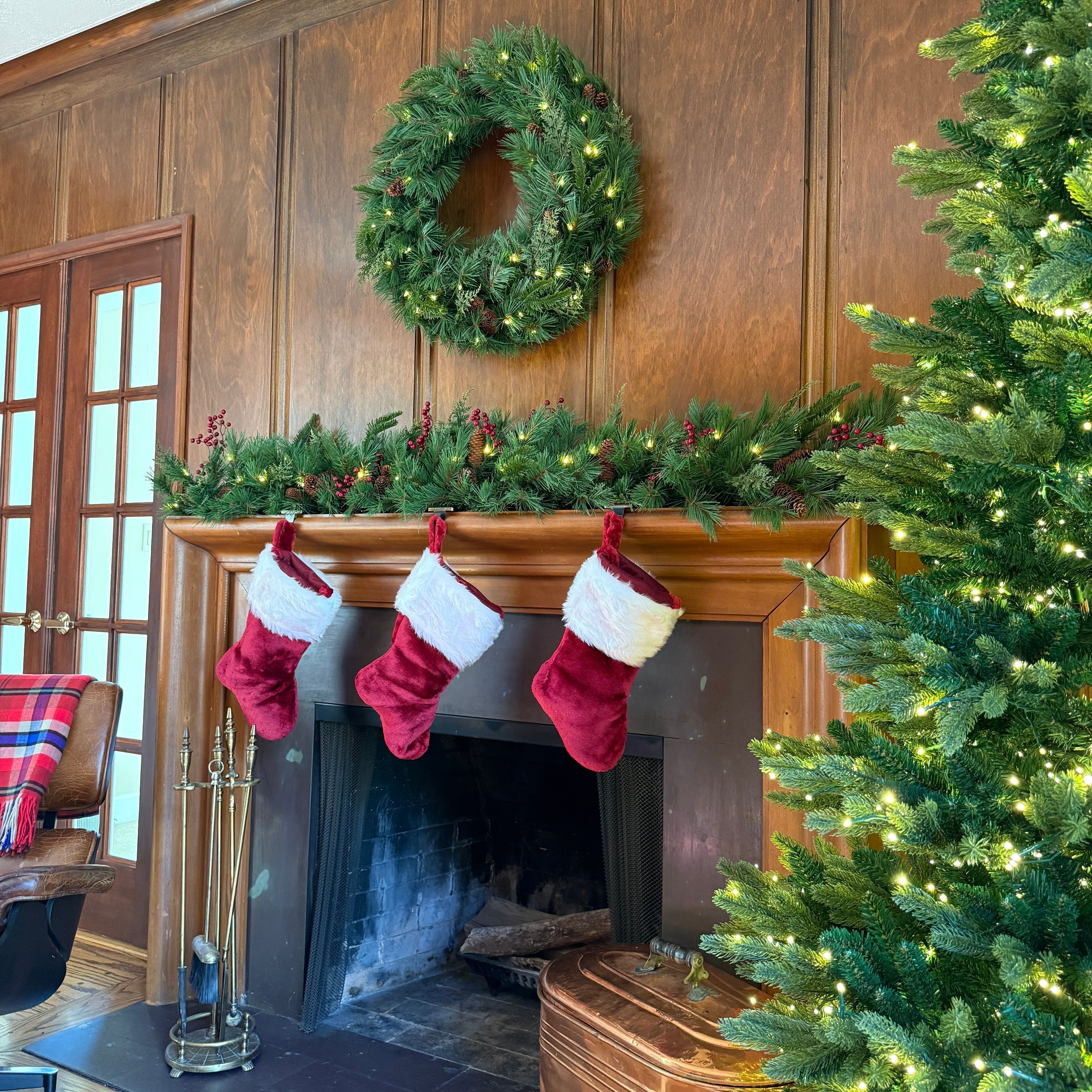
There is no single right day to decorate for Christmas, but there is a smart way to think about it. Nearly half of Americans put their decorations up after Thanksgiving but before December 1, and a good number start earlier, especially outdoors[1]. The trick most people miss is that you do not have to do it all at once, and you do not have to wait to hang the hardware just because you are not ready to light it. Separate those two dates and the whole season gets easier.
We have made pre-lit greenery since the early 1990s, and the question we hear every fall is some version of "is it too early." My honest answer is that it depends on what you mean by decorate. Hanging a wreath and running garland around the porch in mild November weather is simply smart planning. Turning it all on is the part you can save for whenever it feels like Christmas to you. Because our greenery is artificial and our window candles run on timers, you get a freedom fresh greenery never allows: put it up early, and it still looks new in late December.

Most people decorate for Christmas the weekend after Thanksgiving, which is the single most popular time. Nearly half put decorations up after Thanksgiving but before December 1, while roughly a third start their outdoor decorating even before Thanksgiving. There is no wrong answer, but the practical window for most homes is the two weeks bracketing Thanksgiving: hang exterior pieces in the milder days before, and light everything over the holiday weekend.
The surveys are consistent year to year. Nearly half of Americans decorate after Thanksgiving but before December 1[1], and for outdoor decorating specifically, about a third get started before Thanksgiving even arrives[2]. So the honest answer to "when should you decorate" is that the weekend after Thanksgiving is the safe consensus, but starting the exterior earlier is common and completely reasonable. What matters more than the exact date is not leaving it so late that you are hanging garland in the cold and the dark the week before Christmas.
Decorating before Thanksgiving is a matter of taste, not a rule. Some people feel greenery and lights before Thanksgiving rush the season; others love a longer stretch of Christmas. The practical middle ground is to hang the outdoor hardware early, while the weather is mild and ladder work is safe, but hold off on lighting it until after Thanksgiving. That way the work is done, nothing looks premature, and you flip everything on when it feels right.
This is the friendliest debate in decorating, and there is no need to win it. Some households want Thanksgiving to have its own moment; others start the day after Halloween. Both are fine. The reason the argument even exists is that people picture "decorating" as one all-or-nothing event. It does not have to be. The smart move is to split it in two, which is the rule I give every customer who asks.
Put up the physical pieces early, in mild November weather: wreaths on doors and windows, garland on the porch and railings, candles set in the sills. Safer on a ladder, and the hard part is done.
Leave the lights off until it feels like Christmas to you, usually Thanksgiving weekend. Nothing reads as premature when it is unlit, and turning it all on becomes the moment.
I call this the Two-Date Rule, and it solves the whole "too early" problem. Hanging a bare wreath and unlit garland in mid-November does not announce Christmas to the neighborhood; it just means you did the ladder work on a mild, dry day instead of a freezing one. Then the night you decide to light everything becomes a small event of its own.
There is survey data on this, and it is more spread out than the argument usually assumes. In two online surveys conducted on December 1 to 3 and December 3 to 5, 2025, among 1,114 and 1,122 U.S. adult citizens, YouGov found that among those planning to have a tree, 18 percent put it up before Thanksgiving, 28 percent between Thanksgiving and December 1, and 30 percent during the first week of December. A further 19 percent go up between the second week of December and Christmas Eve, and just 1 percent wait until Christmas Eve or Christmas Day.
Thanksgiving falls on Thursday, November 26 in 2026, which makes the weekend of November 27 to 29 the single busiest decorating window of the year. If you want your display finished before that weekend rather than during it, the work has to be done the week before.
The same research found that among Americans who will have a tree, 81 percent plan to have an artificial one and 20 percent a real one, with 3 percent having both. That majority is part of why the timing has moved earlier. An artificial tree has no water reservoir, drops no needles and does not care how long it has been standing, so the constraint that once forced a late start simply does not apply to most households any more.
The exterior hardware is what to put up early: wreaths, garland, and window candles, all unlit. Greenery on a door or railing reads as tasteful and seasonal well before it is lit, and window candles sit quietly in the sill until you switch them on. Save the interior tree and the lighting for closer to the holiday. This lets you handle the physical, weather-dependent work in comfortable November conditions and keep the festive reveal for when you want it.
Start outside, because that is the work that depends on weather and daylight. Hang your wreaths, run garland along the porch and railings, and set your window candles in place. Unlit, all of it reads as simple winter greenery rather than a full holiday display, so you sidestep the "too early" comments entirely. Our front door guide walks through balancing the wreath and garland if you are hanging the entry for the first time. Then, when the calendar and your mood agree, you light it.

Artificial greenery can go up weeks earlier than fresh because it does not dry out or drop needles. Fresh garland and wreaths look their best for only about two weeks before they brown, so hanging them in mid-November means they are past their prime by Christmas. Artificial, UV-treated greenery holds its color and shape for the entire season and for years after, which is exactly why an early start makes sense when your decor is artificial rather than cut.
This is the part fresh-greenery decorators cannot do, and it is the whole case for artificial. A fresh-cut garland is on a two-week clock from the day you hang it, so an early start actually works against you: by Christmas it is dry and shedding. Artificial greenery has no such clock. Ours is UV-treated to hold its color through a full season of sun and weather, so you can hang it in early November and it looks identical on Christmas morning. That is the quiet advantage behind "decorate smarter, not harder": the early start that would ruin fresh greenery is exactly what artificial greenery is built for.

Planning an early start? Everything for the exterior is ready to ship: greenery that holds all season and candles that light themselves.
Shop garlands Shop window candlesPut everything on a timer and let it run itself. A timer turns your garland, wreaths, and window candles on each evening and off overnight on a set schedule, so you never touch them again once they are up. LEDs use very little power, so leaving the display on a timer all season costs little. Battery pieces with a timer typically run the whole season on one set, which means an early start does not mean weeks of fiddling.
Once it is hung, the goal is set-and-forget, and a timer is how you get there. Set it once and the whole display comes on at dusk and shuts off overnight, every night, without you thinking about it. This is affordable because the lights are LED: they use about 70 percent less energy than old incandescent strands and last far longer[3], so running them all season barely registers on a bill. Our battery garland and battery-operated pieces carry a timer built in, so even the spots with no outlet stay on schedule. An early start only pays off if you are not babysitting the display for six weeks, and timers are what make that true.
You might also be wondering: does leaving greenery out for six or eight weeks wear it out? Not the greenery itself, since it is UV-treated for the outdoors. The only thing worth minding is bringing pieces in during an extreme storm, which adds years to their life.
Most people take their Christmas decorations down in January. About half box everything up sometime that month, whether right after New Year's Day or following the older tradition of waiting until Epiphany on January 6. There is no wrong time, but taking down and storing artificial greenery properly is what lets it last for years, so it is worth doing carefully rather than in a rush.
The season has a natural end, and most people reach it in January. About half of Americans pack their decorations away sometime that month[1], some right after New Year's Day and some following the old twelve-days tradition through January 6. Whenever you choose, the takedown matters more than the timing, because careful storage is the difference between artificial greenery that lasts two seasons and greenery that lasts ten. Coil garland loosely, protect the lights and the shape, and keep everything dry and out of the sun until next year.
Tap a question to see the answer.

There is no perfect date, only a smarter method. Hang the exterior early while the weather is mild, keep it unlit until it feels like Christmas, and let a timer run the whole display all season. Because the greenery is artificial and the candles are flameless and timed, an early start costs you nothing and saves you a cold December on a ladder. When you are ready to plan the exterior, everything you need is in the collections.
Shop garlands Shop wreaths Shop window candlesSurvey figures are general national ranges from the sources listed and vary year to year and by region. Bring outdoor decor inside during extreme weather to extend its life.


Ready for a holiday season with all glow and no upkeep? The full Christmas range is ready to shop.
SHOP CHRISTMAS DECOR
