Cart
0
You may also like


Every artificial plant sold as outdoor eventually meets the same judge: the sun. Rain, wind, and cold get the blame in reviews, but the failure that actually retires faux greenery is ultraviolet fading, the slow bleach that turns deep green pale and rich color chalky in a single exposed season. UV protection is the spec that divides the category into plants that last years outdoors and plants that last one summer.
This guide is the category map: what UV protection actually is, which plant forms fit which outdoor spots, and the full durability checklist beyond sun. It draws on every corner of our outdoor range, from boxwoods to flowering fillers, all built UV-protected because we consider it the entry requirement, not the upgrade.
UV-protected means ultraviolet inhibitors are blended into the plant's materials during manufacture, so sunlight's high-energy radiation cannot break down the pigments and polymers. It is a material property, not a surface coating. Without it, color loss begins immediately on exposure and compounds daily; with it, the same placement holds true color for years.
The physics are unglamorous and decisive: UV photons carry enough energy to sever the chemical bonds in ordinary dyes, and outdoor placements collect that damage through every daylight hour, direct or reflected. The tell is the tan line, faded on the sun side and greener on the shaded side, that cheap pieces develop in months. Stabilized materials absorb or dissipate that energy harmlessly. When comparing products, the phrasing matters: for indoor and outdoor use often describes tolerance to damp, while UV-resistant or UV-protected names the spec that actually determines outdoor lifespan.
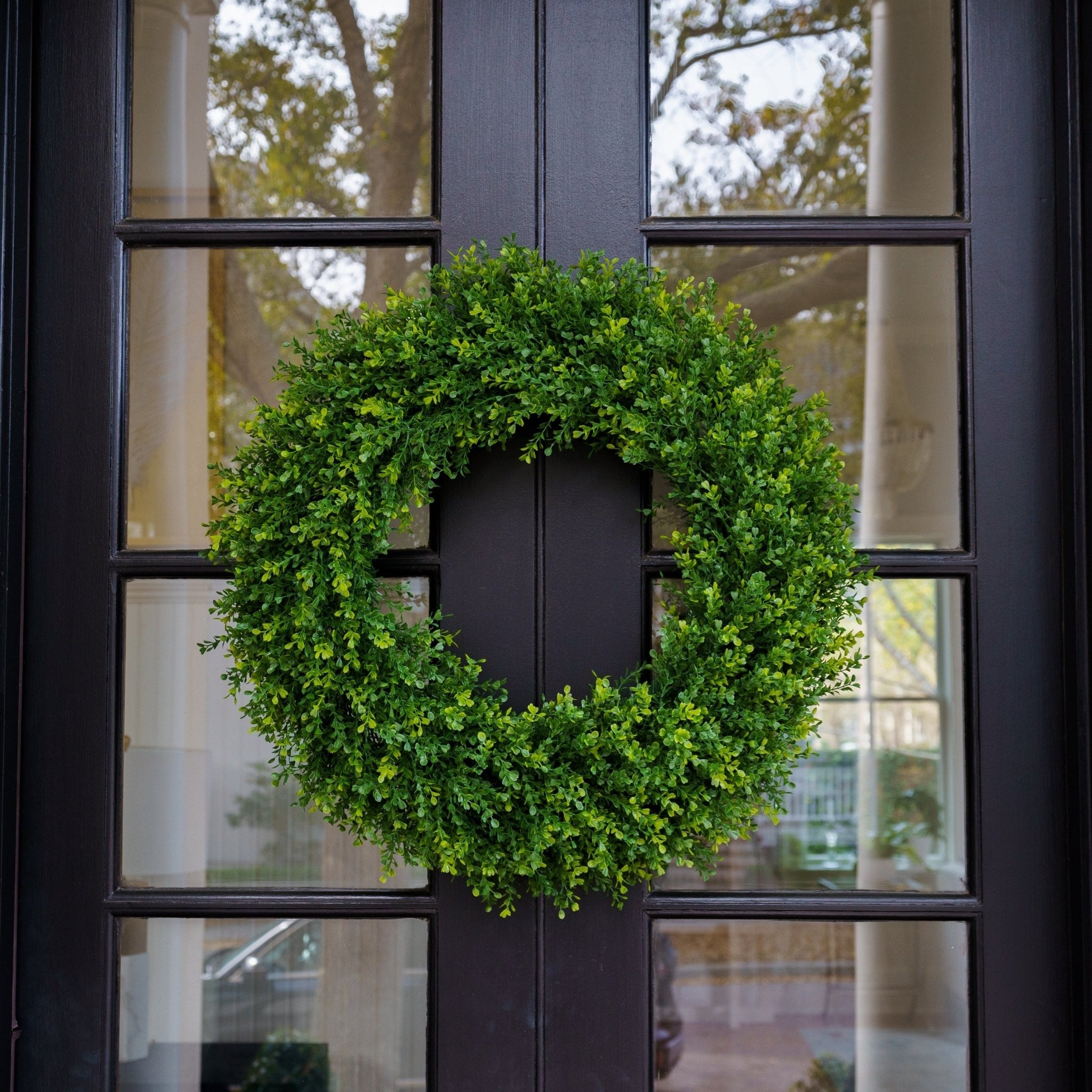
Think in three roles: structure, color, and texture. Boxwood spheres, cones, and wreaths hold the structure role at doors and on tables; flowering fillers, geraniums, petunias, hydrangeas, carry color in boxes, urns, and baskets; and greenery pieces supply texture wherever the other two need softening. Most outdoor spots want one structure or color piece, not a jungle.
The role framework beats shopping by plant name. A front step wants structure, which is the boxwood sphere in a pot doing formal duty year-round. Rails and ledges want color, which is filler territory, mapped in detail across our geranium, petunia, and hydrangea guides. Patio corners want scale and texture together. Because every piece is UV-protected, the placement question is purely aesthetic, and the sunniest spot on the property, the one that kills live plants and fades cheap faux ones, is simply another eligible location.
| Outdoor spot | Role | Best form |
|---|---|---|
| Front steps and door | Structure | Boxwood sphere or cone in pots |
| Window and rail boxes | Color | Petunia or geranium box fillers |
| Urns and entry pots | Color | Hydrangea or geranium urn fillers |
| Hanging hooks | Color | Urn and basket fillers, trained to spill |
| Patio corners | Structure + texture | Boxwood plus greenery in large pots |
| Fence lines and gates | Texture | Greenery with one color accent |
Structure, color, and texture, all built for full sun.
Shop outdoor plants and floralsFour items: wired construction, so stems bend in wind and reshape after storage instead of snapping; weather-safe attachment points, since ties and bases take the mechanical strain; colorfast foliage across the piece, not just the blooms; and frames or liners that will not rust-streak the wall behind them. UV protection leads the list, but wind and handling are what test the rest.
A piece passing all five specs behaves like outdoor equipment: it goes up in spring, shrugs off the season, and stores flat in winter, repeating for years. The comparison with live outdoor plantings is one-sided by design, since even easy live plants carry non-negotiable schedules, full-sun geraniums wanting water multiple times a week in containers and dying at first hard frost[1]. The faux checklist is paid once at purchase. The live checklist is paid weekly, which is the entire economics of the category in one sentence.
You might also be wondering: is there a spot faux outdoor plants should not go? Direct contact with grill-level heat, and anywhere realism logic fails, like lush blooms in a spot obviously too dark for them. Everything else is eligible.
Apply the same design rules live landscaping uses: repetition over variety, one color story per sightline, structure at the anchors and color at the accents, and honest placement where the equivalent live plant would plausibly thrive. Durability gets the piece through the seasons; these rules are what make the seasons look good.
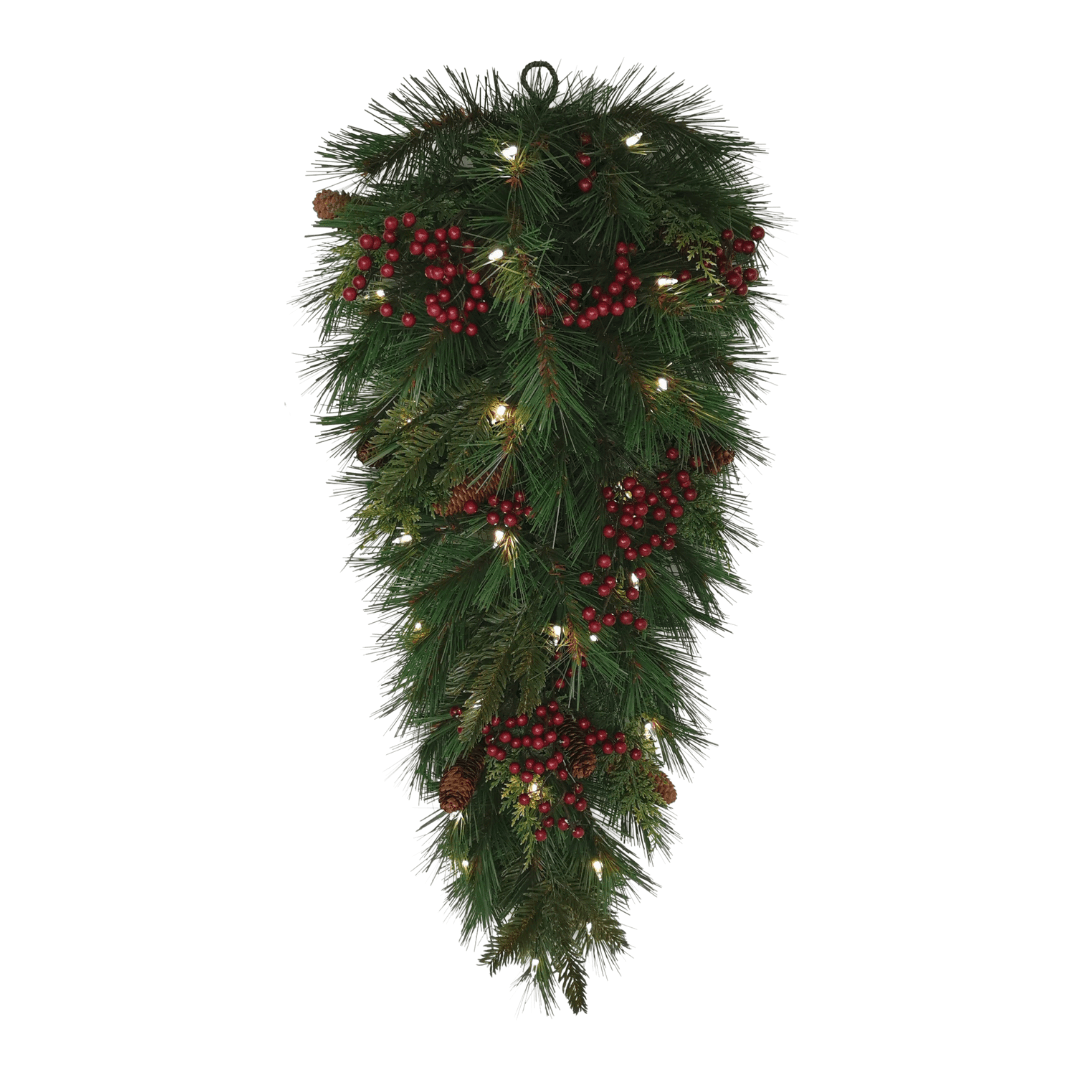
The style failure mode of faux outdoor decorating is accumulation, one of everything, scattered, and the fix is the same discipline running through all of our guides: pick a palette, repeat it, and let structure pieces do the formal work. Seasonal rotation keeps the display honest, flowering fillers for the warm months, antique tones for fall per the colorway guide, lit greens for winter, with UV-protected boxwood holding structure year-round. A property run this way reads as landscaped, and the only maintenance line item is the seasonal five-minute clean.
 Ask Celestial
Tap a question to see the answer.
The outdoor faux category has one gatekeeping spec and it is UV protection: get that right and the rest is design, structure at the anchors, color at the accents, one palette per sightline, honest placements. Build it once with pieces rated for the brightest wall you own, and the landscaping line item becomes a five-minute seasonal clean.
Shop outdoor plants and floralsLive-plant care figures are from the university extension source cited above. Fading rates vary with exposure and climate.

Welcome to the Celestial Edit: bite-size style guides, product spotlights, and zero-stress ideas for every room, porch, and holiday. From lifelike florals and timeless greenery to Christmas décor and garlands, we make easy home décor look elevated—fast. Think set-it-and-forget-it styling for the season and beyond.