

Cart
0
You may also like


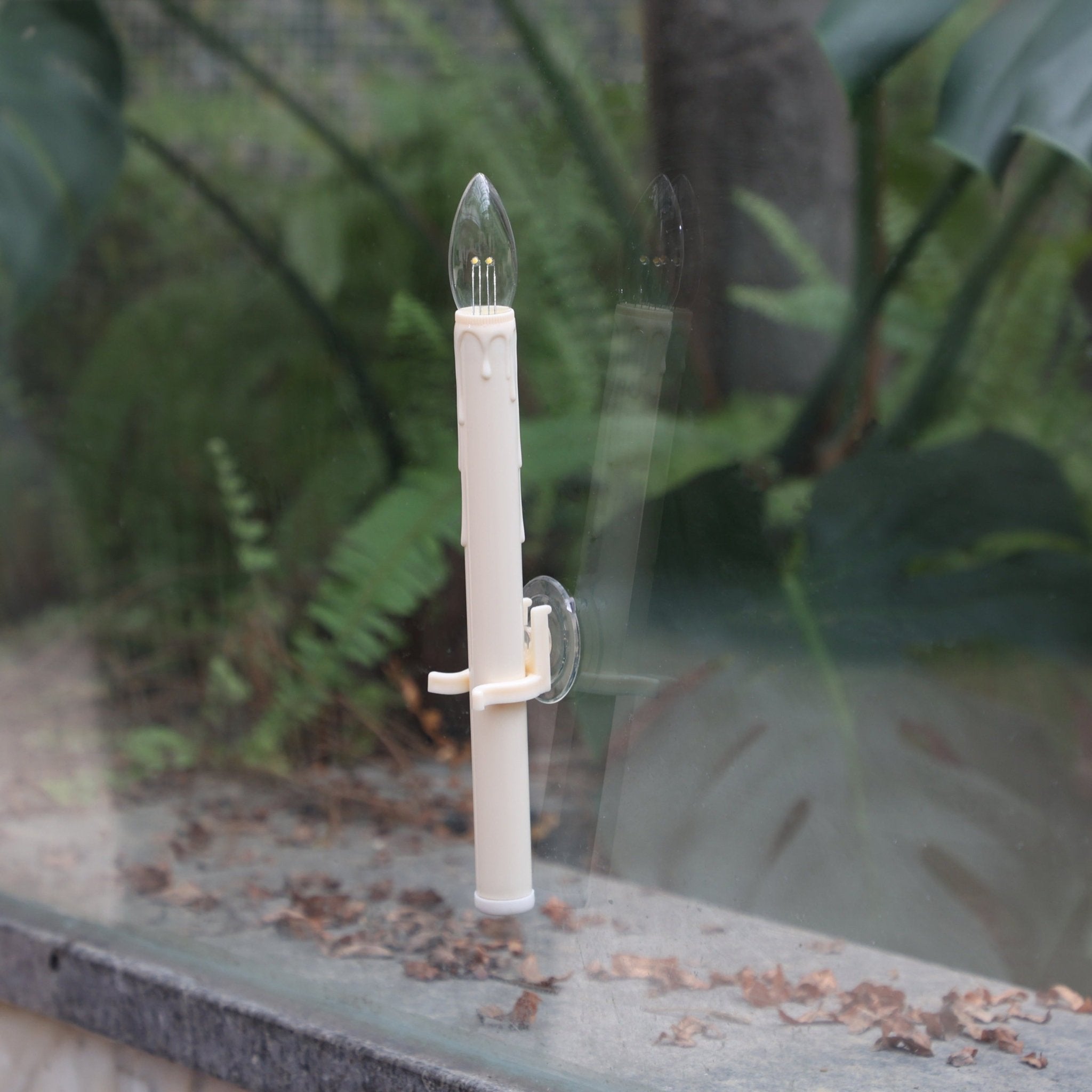
One of the most common questions I hear about window candles is whether you need one in every window or only the ones out front. The honest answer is that most homes look their best with a candle in every front-facing window, the ones the street sees, and do not need candles in windows no one views from outside. But the right choice depends on your facade, your budget, and what the approach to your home actually reveals. Here is a simple way to decide, so you buy the right number and place them where they do the most good.

The goal is a facade that reads as warm and intentional from the street, and you can get there without candling literally every pane in the house. Let me walk you through how to choose.
For most homes, just the front-facing windows. A candle in every window the street sees delivers the classic colonial look and nearly all of the curb appeal, so windows no one views from outside can be skipped without anyone noticing. Put candles in every front window first, evenly and symmetrically, then decide whether to expand. Add side windows if your home is seen from a corner or long driveway, and interior or back windows only if you want the glow inside or from the yard. Symmetry across the visible facade matters more than the total count.
The instinct to fill every window is understandable, but it is usually more than the look requires and more than the budget needs. The tradition of candles in the window is about the view from outside, a warm, even row of lights across the front of the home, welcoming and a little nostalgic. That effect comes entirely from the windows people can see, which for most houses means the front facade. Windows on the back of the house, or interior windows that face a hallway, glow only for you, so they are optional rather than essential. Start by fully candling the front, and treat everything beyond that as a choice about how complete you want the glow from other angles and inside.
Walk out to the street or the end of your driveway at dusk and look back at your home. The windows you can see are the ones that matter, so candle those. Note which windows are visible from the main approach, whether that is straight on or from an angle, and prioritize them. A candle in a window you cannot see from outside only lights the room it is in, which is a nice touch but not part of your curb appeal. Let the view from the street, not the floor plan, decide your placement.
The best way to decide is to see your home the way visitors and passersby do. On an evening when it is getting dark, step out to the street or the end of the drive and look back at the house. Some windows will read clearly, the front-facing ones, and a corner lot or angled approach may reveal a side or two as well. Those visible windows are your priority list. The ones that disappear from that vantage point, back windows, windows screened by a fence or shrubs, interior windows, are the ones you can skip or save for later. This simple walk answers the question far better than counting windows on a plan, because it tells you exactly where a candle will actually be seen.

It can be, for certain homes, but it is not necessary for most. Candling every window gives the fullest, most uniform look from every angle and puts a warm glow in every room, which is lovely for a corner lot, a home seen from multiple sides, or anyone who wants the effect inside as well as out. The tradeoff is cost, since it means more candles and more batteries. For most homes, fully candling the front delivers the great majority of the curb appeal for far less, so every window is a worthwhile upgrade rather than a requirement.
Whether every window is worth it comes down to how your home is seen and how you want it to feel inside. If you live on a corner or your house is viewed from several approaches, candling only the front leaves visible gaps, so extending to the sides truly improves the look. And if you love the glow from inside, a candle in the rooms you spend evenings in is a real pleasure, not just curb appeal. But for a typical home on a standard lot, the front facade is what people see, and filling it well gives you the classic look for the price of a set or two. So think of every window as the deluxe version: wonderful if you want the most complete effect and have the budget, unnecessary if the front already does the job.
| Consideration | Front windows only | Every window |
|---|---|---|
| Curb appeal | Covers what the street sees | Uniform from every angle |
| Cost | Fewer candles, best value | More candles and batteries |
| Best for | Most homes and flat facades | Corner lots, homes seen from many sides |
| Interior glow | Front rooms only | Every room glows |
| The look | Classic and high-impact | Fullest and most complete |
Count your front-facing windows, and that is your starting number. Our window candles come in sets of two and four from 49 dollars, so add up the visible windows and buy the sets that cover them. One remote runs a whole set, so a larger facade is still easy to control. If the budget is tight, cover complete symmetric groups first, such as both windows flanking the door, rather than spreading a few unevenly. You can always add a set next season to reach the sides or interior.
Sizing your order is just counting. Walk the front of the house and tally the windows you want lit, then buy in the sets of two and four that add up to that number, starting from 49 dollars. Because one remote controls an entire set at once, even a dozen candles across a big facade stay simple to run. If cost is a constraint, the key is to buy for symmetry rather than coverage: it is better to fully light the two windows on either side of the front door than to scatter three candles across five windows, because the eye reads the balanced pair as intentional and the scattered three as unfinished. Our window candle buyer's guide can help you choose the style and finish once you know your number.

Put one candle centered in each window, and keep the height and finish identical across every candle so the row reads as one. Light windows in balanced pairs, both sides of the door, both windows on a symmetrical facade, rather than at random. If you cannot do every window at once, complete symmetric groups instead of spreading candles thinly. And turn the brighter side of each bi-directional candle toward the street. Consistency of placement, height, and finish is what makes a display look intentional rather than piecemeal.
Symmetry is the quiet secret behind every window-candle display that looks truly finished. The rules are simple: one candle, centered, in each window; the same height on every candle; the same finish throughout; and the brighter side of the bi-directional bulb facing out to the street. Beyond each individual candle, think in balanced groups, a candle in the window to the left of the door deserves a match to the right, and a symmetrical facade wants its pairs lit evenly. This is also the answer when the budget will not stretch to every window at once: rather than lighting a random handful, complete whole symmetric groups, so what you have done looks deliberate and you simply extend the pattern later. Get the placement, height, and finish consistent, and even a modest number of candles reads as an elegant, intentional display.
Count your front windows, cover them evenly, and let one remote light the whole set, then expand to the sides or interior whenever you like.
Shop window candles The complete window candle guideYou might also be wondering: does it look odd to have candles only in the front? Not at all. The tradition itself is a front-of-house one, so a warm, even row across the facade looks complete and intentional on its own; no one standing outside is counting the windows around the back. Front-only is not a compromise, it is the classic look, and everything beyond it is simply how far you choose to carry the glow.
Tap a question to see the answer.
The window-candle question is simpler than it seems: light the windows people actually see, do it evenly, and let the rest be a choice rather than an obligation. For most homes that means a warm, symmetrical row across the front facade, the classic look, achieved with a set or two and one remote. From there, extending to the sides or the interior is entirely up to how complete you want the glow. Count your front windows, cover them well, and your home will welcome everyone who passes with that timeless candlelit facade.
Shop window candles How to set up window candlesWindow candles are designed for indoor use. Sets and prices are current at the time of writing and may vary. Place one candle per window, centered, with the brighter side facing out, and follow the manufacturer's instructions for batteries, remote, and timer settings.


Want that warm window glow with no cords and no wobble? Our patented Window Hugger® candles are ready to shop.
SHOP WINDOW CANDLES
